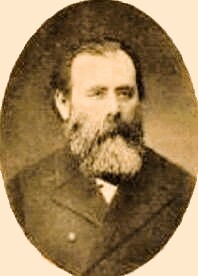
A moment of calm has followed the anguish of the massacre, and persecutors and persecuted may catch their breath a little. Meanwhile the Jews are being repatriated from Palestine with funds collected precisely for their emigration to Palestine. But Western Jews have learned once more to put up with the yell, Hep, Hep, as their fathers did in bygone days. The fiery explosion of anger sparked by the affront borne has given way to a precipitation of ash blanketing the scorched earth. Close your eyes and hide your head like the ostrich, but if you don't take advantage of this transient pause and contemn lifesaving means more radical than the poultices of quacks applied to our unfortunate people during millennia a lasting peace will never be yours.
September, 1882
(p. 166).
* * *
And so Judaism and Jew hatred go together throughout history. As with the eternal Ahasuerus the hatred seems to never end. Only a blind man can dispute that Jews are the chosen people of universal hatred. The peoples can be quite different from one another but they shake hands in their animosity toward the Jews, on this all peoples concur. The amount and tone of the spite depends on the degree of civilization owned, but the spite manifests itself always and everywhere through violent acts: persecutions rooted in envy or concealed under a mask of tolerance and protection (p. 170).
Summarizing what has been said: The Jew is a zombie to the living, an out-of-towner to locals, a hobo to the settled, a beggar to the affluent; an exploiter millionaire to the needy, a foreigner to patriots and a despised competitor to everybody (pp. 172-73).
Pathetic image ours! We are not deemed to be a nation and so we have no say in their councils even in the matters which concern us. Our fatherland is the foreign nation, our unity the diaspora, our solidarity the universal hostility, our weapon meekness, our defence flight; our originality conformity; our future the day after. What an appalling role for a people to play who in olden days had their Maccabees! (p. 175).
And then there is the faith in the Messiah, the belief in the arrival of a benevolent supernatural power. Alongside it the religious proposition to endure divine punishments patiently. Both have made us neglect our national liberation, unity and independence.
We forsook the idea of the fatherland with greater gusto the greater our material comfort. And so we sank ever deeper. The ones without a fatherland got to forget the fatherland. Hasn't the hour arrived at last to bear out how much disgrace that forgetfulness has meant for us? (p. 176).
Naturally the founding of a Jewish haven can not be realized without the backing of governments. To acquire our haven and to secure a permanent stability for it the makers of our national rebirth must proceed with utmost prudence and perseverance. What we long for is at heart not novel or dangerous for anyone.1
Instead of the many havens that until this day we have grown accustomed to scout, we now wish to have a unique haven whose existence however must be guaranteed (pp. 186-87).