April 10, 1813. Los guerrilleros por la religión, la patria y el Rey, diario polémico-religioso de la Coruña, month IV, number 74, pages 195-96.
Adiáforo. You said prior some stuff about tolerance, Philaleto, wanting to insinuate that a bit of this philosophy seeps into the paper of the abbot of Valdeorres.1
Philaleto. Read what the pamphlet full of piffles says, Adiáforo, and you will see that on pages 43 and 44 its learned author stamps a dark libel on the good inquisitor Lucero, presents as fact that the Inquisition hangs Jews from the pulleys merely for being Hebrews and the abbot would like this Jewish people of today to be still the one of whom God said, "Israel is my son."
It is apparent that the good Doctor has not read holy Scripture much and that he stands in need of Franklin 2 teaching him a few lessons. If Jews are the sons of God they must be so through the flesh because they descend from Abraham, but what does the Apostle say? "Not all those tallied as Israelites are Israelites nor all those who descend from Abraham are his sons, but only they who receive the promises delivered by God to Abraham; however these branches are presently cut off from their trunk, propter incredulitatem fracti sunt" (Rom. II).
Who then gave our Doctor of new lights licence to tag "son of God" a people whom God censured for their disbelief and stubbornness? And why is this illuminato so generous to and so compassionate an advocate of the Jews when he should know, being a prelate, that neither the Church—so compassionate a mother—nor he himself, whom I presume prays to and intercedes before God for all pagans and heretics during his saying Mass, prays for the Jews?
Does he not realize that these are the most resolute and obstinate enemies of Christianity and that if they could but for a moment erase it from the face of the earth they would sacrifice all their wealth and cash to do so?
[...]
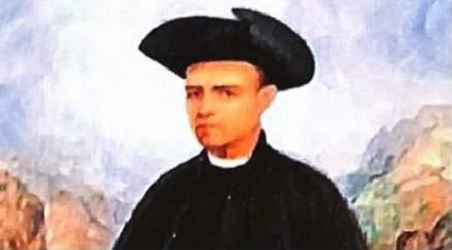
The Galician webpage adds that he was elected deputy for the Canary Islands to the liberal Courts of Cadiz in 1811. There he became notorious for his discourse against the Spanish Inquisition. This annoyed other Galician deputies, particularly the Bishop of Ourense. After the restoration of the absolutist monarchy in 1813 he was tried by a church tribunal—and acquitted. The Liberals returned to power in Spain between the years 1820-23. During this period Ruiz de Padrón got again elected to the Courts, this time as a deputy for the Kingdom of Galicia.In 1784 he embarked for America and visited Cuba first. Subsequently an Atlantic storm diverted his vessel toward the American coastline, and he ended up in Philadelphia where he met and conversed with two great illustrated men, Benjamin Franklin and George Washington. During his stay in North America Ruiz de Padrón wrote his first pamphlet against the Spanish Inquisition.
Back in Spain he doffed his Franciscan habits and as a layman won the competitions for curate of a Leonese parish in 1802 and for the post of abbot of Villamartín de Valdeorras in 1807.
February 15, 1850. Revista Médica, periódico de la Academia de Emulación de Santiago, year 1850, number 48, page 240.
The widespread use of jennet's milk in illnesses derived from lassitude or from thoracic diseases was initiated in France by a Jew during the monarchy of Francis I. This king felt surpassingly weak; the fatigues of war and intemperance whittled him down to a state of languor that worsened each day. The king was told about a Jew of Constantinople who had the reputation of curing this type of ailment. Francis I sent a letter to his ambassador in Turkey with the charge of bringing the Israelite physician at all costs. He arrived, and the only remedy he prescribed was jennet's milk. This remedy had an excellent effect and at once all the courtiers, male and female, took up the same regimen.
Wednesday December 24, 1856. La Oliva: periódico de política, literatura e intereses materiales, year I, number 94, page 1.
The situation of the Jews has improved markedly under the present government of Russia. Today they can send their children to institutes of privileged learning. Furthermore medical doctors and lawyers may become civil servants of the State, and the five-year exemption from military service will prove very advantageous to this class of citizens. The deputies who observe the Jewish religion will convene shortly in St. Petersburg to agree on various points for improving the lot of the Israelites.
Saturday July 16, 1859. Boletín para el clero del Obispado de Lugo, year 1859, number 29, page 1.
Since the Lord has wanted to make use of Moses to establish the Jewish religion, which is the first foundation of Christianity, the name of the holy Prophet and his writings are insufferable to skeptics, and for that reason they spare nothing to obliterate even his memory...
It is true that Jews and Christians have always regarded him as a great prophet. Why then maliciously deprive him of a glory that is rightly his, acquired long ago? All the more is that glory grounded when characters of truth are detectable in his text. He instructs us concerning the creation of the world, he transmits his sacred conversations with God and gives us the noblest idea of the Creator that human understanding can fathom. The text portrays the Creator's divine perfections in the warmest colours and prescribes laws full of equity and most capable of preserving unity and instituting good order. What is reprehensible about this? Should one mistrust a man who reasons so well and whose humbleness reaches the extreme of revealing his defects to us?
God makes use of Moses to lead a predilect people and authorizes his mission with the greatest wonders, those marvels he recounts in his books. Can this be a reason for treating him like an impostor when ours are more potent for regarding him as a holy Prophet? Can we with any justice refuse to believe him when he relates to us what he has seen and done, especially when a great body like the Jewish nation attests on his behalf?
[...]